
Emergency Water Extraction in
Fort Worth, TX
Immediate water removal to prevent secondary damage and mold. Available 24/7 for residential and commercial properties.
Comprehensive Emergency Water Extraction
Standing water causes damage instantly. Our truck-mounted extractors remove thousands of gallons per hour, minimizing the soak time of your structural elements and belongings.
When you're standing in ankle-deep water at 2 AM because a supply line burst or a water heater failed, every minute counts. Water doesn't wait politely for business hours. It spreads across your floors, seeps into baseboards, wicks up drywall, and penetrates the subfloor underneath your feet. Within the first hour, water can migrate from the source of the leak into adjacent rooms. Within 24 hours, drywall begins to swell and delaminate. Within 48 hours, mold spores begin germinating on any organic material they contact. This is why emergency water extraction isn't a service you schedule for next Tuesday—it's a race against irreversible damage.
Our emergency water extraction service in Fort Worth operates 24/7/365 because water damage doesn't respect holidays, weekends, or your sleep schedule. We answer the phone on the first ring, dispatch a crew from our strategically positioned staging areas throughout the Fort Worth metro area, and guarantee arrival within 1 hour for properties in our primary service zone, which includes Fort Worth, Arlington, Keller, Southlake, and surrounding cities. Our trucks are pre-loaded with truck-mounted extraction units capable of removing over 3,000 gallons per hour, portable extractors for upper floors and areas the truck units can't reach, and submersible pumps for severe flooding scenarios.
The extraction process itself is more nuanced than simply vacuuming up water. Different surfaces require different techniques. Hardwood floors, for example, can be saved if we extract water quickly using weighted extraction wands that create a seal against the wood surface, pulling moisture from within the grain before it swells and cups. Carpet requires a multi-pass approach—first we extract from the carpet pile, then we pull back the carpet to remove the saturated pad (which acts as a sponge and cannot be adequately dried), extract from the subfloor, and treat the area with antimicrobials before re-laying the carpet with fresh pad.
What separates professional extraction from DIY attempts with a shop vac is volume and velocity. A standard wet-dry vacuum removes maybe 10-15 gallons per hour and leaves a significant amount of moisture behind because it lacks the suction power to pull water from dense materials. Our truck-mounted units generate vacuum lift measured in inches of mercury, creating negative pressure strong enough to extract water from deep within carpet backing, subfloors, and even concrete slabs. This isn't just faster—it's the difference between saving your flooring and ripping it all out.
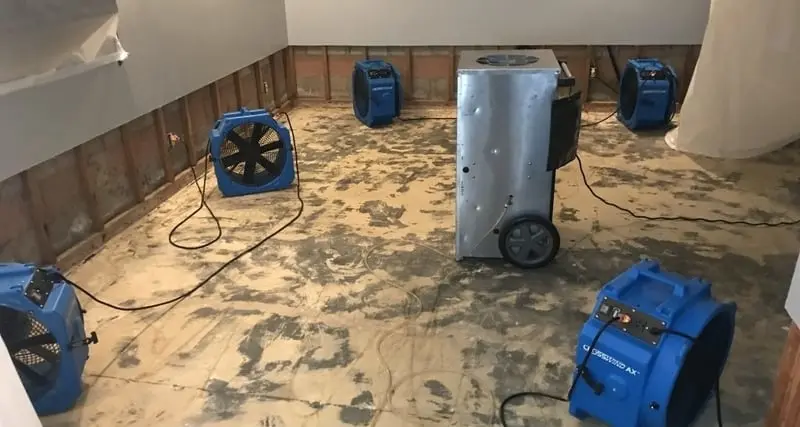
Fort Worth's climate adds another layer of urgency to water extraction. Our humid subtropical climate, especially during spring and summer months, creates an environment where relative humidity can spike above 70%, which is the threshold where mold growth accelerates. When we extract water from your home, we're not just removing the visible pooling—we're lowering the overall moisture load in the air to prevent secondary humidity damage to contents and surfaces that weren't directly contacted by water. This is why extraction is immediately followed by strategic placement of dehumidifiers and air movers, creating a controlled drying environment that prevents the damage from spreading.
The neighborhoods we serve span the full range of Fort Worth's housing stock, from historic homes in Berkeley and Ryan Place with original hardwood floors that require delicate handling, to new construction in Alliance and Harvest with engineered flooring and modern subfloor systems. Each property type responds differently to water, and our technicians are trained to recognize these differences and adjust extraction techniques accordingly. Speed is critical, but so is precision—aggressive extraction on a delicate antique floor can cause more harm than the water itself.
Common Causes in Fort Worth
- Supply line bursts (washing machine, refrigerator, dishwasher)
- Water heater catastrophic failures
- Toilet overflows and supply line disconnects
- Pipe bursts from freezing temperatures
- Slab leaks saturating concrete floors
- Severe roof leaks during thunderstorms
Our Restoration Process
Assessment & Inspection
We identify the source of water and map the moisture spread.
Water Extraction
Removing standing water immediately to prevent secondary damage.
Drying & Dehumidification
Industrial equipment dries deep into walls and floors.
Cleaning & Sanitizing
We use antimicrobial treatments to ensure safety.
Frequently Asked Questions
How quickly should I call for emergency water extraction?
Immediately. The first 24-48 hours after water intrusion are the most critical. Mold can begin growing within 24 hours, and structural materials like drywall and subfloors absorb water rapidly. The sooner we extract the standing water, the more of your property we can save from permanent damage. Call us the moment you discover water—do not wait until morning or after the weekend.
Can I just use a shop vac to remove the water myself?
A shop vac can remove surface water, but it lacks the power to extract moisture from carpet backing, subfloors, and wall cavities where the real damage occurs. Our truck-mounted extractors generate industrial-level suction that pulls water from deep within materials, significantly reducing drying time and preventing hidden moisture that leads to mold. DIY extraction often leaves enough moisture behind to cause secondary damage that costs far more than professional extraction would have.
What should I do while waiting for the extraction crew to arrive?
If safe to do so, shut off the water source. Turn off electricity to affected areas if water is near outlets or appliances. Move valuables and furniture to dry areas. Do NOT use a standard vacuum on wet carpet (electrical hazard). Do NOT use your HVAC system, as it can spread moisture to unaffected areas. Take photos for insurance documentation. Then stay out of the affected area and let our professionals handle the extraction safely.
Do you extract water from second-floor rooms and attics?
Absolutely. We carry portable electric extractors specifically designed for upper floors, attics, and areas where our truck-mounted units cannot reach. Water damage on upper floors is particularly destructive because water migrates downward through ceilings, insulation, and wall cavities, often affecting multiple levels. We extract from the source and trace the water migration path to address all affected areas.
Emergency Water Extraction Near You
We serve the entire Fort Worth metro area. Click your city for local pricing, response times, and area-specific information.
Get Priority Response
Step 1 of 3Service Details
- Truck-mounted water extractors (3000+ GPH capacity)
- Portable electric extractors for upper floors
- Weighted hardwood floor extraction tools
- Submersible sump pumps for severe flooding
Why Choose Us?
- Locally Owned & Operated
- Direct Insurance Billing
- 5-Star Google Rated