
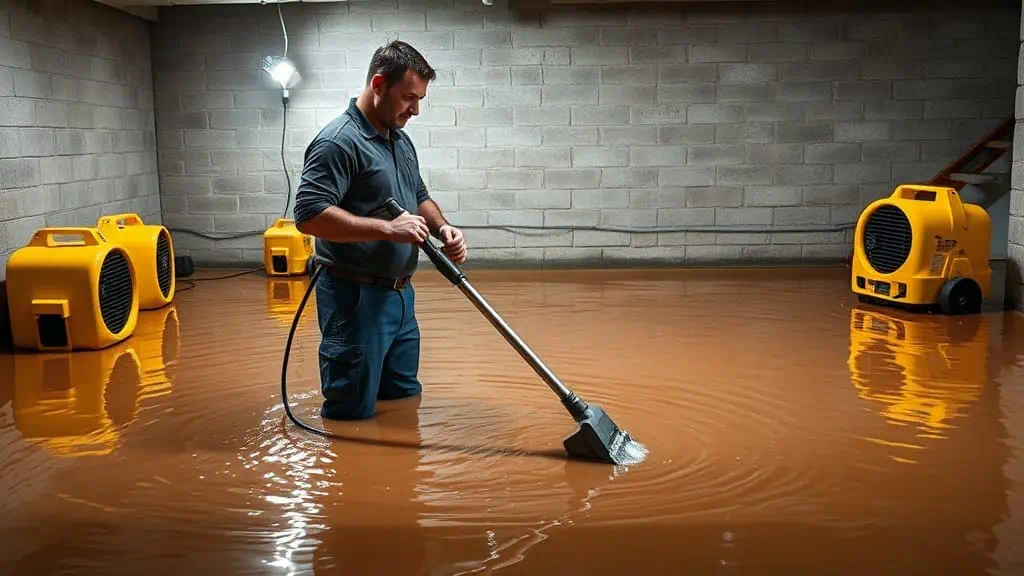
Basement Flooding Restoration in
Fort Worth, TX
Complete basement water removal and restoration to protect your foundation and stored belongings. Available 24/7 for residential and commercial properties.
Comprehensive Basement Flooding Restoration
Basement flooding demands immediate action because water pooling against foundation walls accelerates hydrostatic pressure damage and can compromise your home's structural integrity. Our crews deploy submersible pumps rated for high-volume extraction, followed by targeted structural drying that addresses concrete, block, and framing materials at their specific evaporation rates. We also apply antimicrobial treatments to prevent secondary contamination in these below-grade environments where humidity naturally lingers.
Basement flooding in the Fort Worth area is less common than in northern climates because many homes here are built on concrete slabs rather than basements. However, homes in established neighborhoods like Arlington Heights, Monticello, and parts of Keller were built in the 1960s and 70s with full or partial basements, and these underground spaces face unique flood risks. A basement flood can result from foundation cracks allowing groundwater infiltration, sewer backups, sump pump failures during heavy spring storms, or burst pipes in mechanical rooms. When water pools in a basement, it doesn't just damage stored belongings—it threatens your home's structural foundation and creates the perfect environment for toxic mold growth in hidden corners.
The Fort Worth area sits on expansive clay soil that swells dramatically when wet and shrinks during drought. This soil movement creates hydrostatic pressure against basement walls, forcing water through even hairline cracks in the foundation. After intense North Texas thunderstorms that drop 3-5 inches of rain in a few hours, we often see basement seepage along the floor-wall joint where the footer meets the foundation wall. This water carries soil minerals, sediment, and sometimes Category 2 contaminants depending on the source, requiring more than simple extraction.
Our basement flooding restoration begins with rapid water removal using high-capacity submersible pumps rated for debris-laden water. Standing water in a basement exerts tremendous pressure on foundation walls and floors, and the longer it sits, the greater the risk of structural damage. We extract every gallon and immediately assess the water category to determine the proper sanitization protocol. Basement floods from sump pump failures or groundwater intrusion typically qualify as Category 2 gray water, requiring antimicrobial treatment of all contacted surfaces.
Drying a flooded basement is more complex than drying above-grade spaces because basements naturally have poor ventilation, limited air exchange, and high humidity even when dry. Concrete walls and floors hold moisture for weeks if not properly dehumidified. We deploy commercial LGR dehumidifiers that can pull moisture from the air even in cooler basement temperatures, and we use air movers to create circulation that drives moisture out of concrete and into the air where dehumidifiers can capture it. Thermal imaging helps us identify areas where water has wicked up drywall or insulation, guiding targeted drying efforts.
One critical but often overlooked aspect of basement flooding is determining why it happened. If a sump pump failed, was it a mechanical failure, power outage, or overwhelmed capacity? If groundwater infiltrated, is there a drainage issue around the foundation, or has the footer drain tile clogged with sediment? We assess root causes and recommend solutions—installing battery backup sump pumps, improving exterior grading and downspout extensions, applying interior or exterior waterproofing coatings, or installing a French drain system. The goal is not just to dry your basement this time, but to prevent the next flood.
Common Causes in Fort Worth
- Sump pump failure during heavy thunderstorms
- Foundation cracks from expansive clay soil movement
- Clogged or failed footer drain tiles
- Poor exterior grading directing water toward foundation
- Sewer backups into basement floor drains
- Burst pipes in basement mechanical rooms
Our Restoration Process
Assessment & Inspection
We identify the source of water and map the moisture spread.
Water Extraction
Removing standing water immediately to prevent secondary damage.
Drying & Dehumidification
Industrial equipment dries deep into walls and floors.
Cleaning & Sanitizing
We use antimicrobial treatments to ensure safety.
Frequently Asked Questions
Why did my basement flood during the last Fort Worth storm?
Basement flooding in Fort Worth typically results from overwhelmed sump pumps during intense rain, foundation cracks from our expansive clay soil, clogged footer drains, or poor exterior grading. North Texas storms can drop several inches of rain in a short period, saturating the soil and creating hydrostatic pressure that forces water through any weak point in your foundation. We assess the root cause and recommend permanent solutions.
Can you save carpet and drywall in a flooded basement?
It depends on the water category and how quickly we respond. If the water is Category 1 (clean water from a burst pipe) and we extract within 24 hours, carpet and drywall can often be saved. If the water is Category 2 or 3 (groundwater, sewage backup), porous materials like carpet pad and drywall must be removed per IICRC standards. We assess each situation individually and provide honest recommendations.
How do I prevent my basement from flooding again?
Prevention strategies include installing a battery backup sump pump system, ensuring downspouts extend at least 6 feet from the foundation, improving exterior grading to slope away from your home, installing interior or exterior waterproofing systems, and maintaining footer drain tiles. We assess your specific situation and recommend the most cost-effective solutions for your Fort Worth property.
Basement Flooding Restoration Near You
We serve the entire Fort Worth metro area. Click your city for local pricing, response times, and area-specific information.
Get Priority Response
Step 1 of 3Service Details
- Submersible trash pumps (handles debris-laden water)
- Commercial LGR dehumidifiers optimized for cooler temperatures
- High-velocity air movers for concrete surface drying
- Moisture meters for concrete and masonry
Why Choose Us?
- Locally Owned & Operated
- Direct Insurance Billing
- 5-Star Google Rated