
Water Damage Restoration in
Newark, TX
Providing restoration services to the tight-knit Newark community in Wise County, situated near Eagle Mountain Lake just north of Fort Worth.
Local Experts You Can Trust
Newark is a small Wise County community in zip code 76071, positioned at the northern edge of the Fort Worth metroplex where suburban development gives way to the open Texas countryside. With just over 1,200 residents, Newark maintains a genuine small-town identity centered around the Newark City Park, the Newark Public Library, and the community's close proximity to Eagle Mountain Lake—the 8,791-acre Tarrant Regional Water District reservoir that defines this area's identity as much as any local institution. Eagle Mountain Lake was impounded in 1934 when a dam 85 feet high and 4,800 feet long was completed on the West Fork of the Trinity River. Today, as of early 2026, the reservoir typically maintains levels near 90 percent of capacity, meaning Newark properties near the shoreline exist in constant proximity to an enormous body of water that can rise rapidly during wet periods. Eagle Mountain Park along the lakefront draws visitors and reminds residents that their community's greatest asset is also its most significant water damage risk factor.
The geology beneath Newark reflects the transitional nature of this area between the Fort Worth prairie and the Wise County uplands. The community sits on a combination of Paluxy sandstone bedrock and overlying expansive Vertisol clay soils—a pairing that creates complex foundation behavior. The Paluxy formation, a mid-Cretaceous sandstone unit, provides a relatively stable base, but the shrink-swell clay soils atop it behave aggressively during North Texas's wet-dry cycles. These clay soils can expand up to 30 percent of their dry volume when saturated by spring storms, generating pressures that crack concrete slabs and shift pier foundations. In the Eagle Mountain Lake Estates area and along County Road 4876, where many properties were constructed between the 1970s and early 2000s, this foundation movement is particularly evident in homes that have experienced repeated seasonal stress without remediation. Water damage restoration in clay-soil environments must account for the likelihood that the same moisture event that caused immediate water intrusion has also shifted the foundation, potentially compromising drainage grades and creating pathways for future intrusion.
Eagle Mountain Lake's flood history underscores the severity of Newark's lakefront risk. When Wise County and surrounding areas receive sustained heavy rainfall—events that have occurred with increasing frequency as North Texas weather patterns intensify—the Tarrant Regional Water District must manage outflows carefully to prevent the reservoir from overtopping. When those outflows increase significantly, downstream and shoreline areas absorb the impact. The Lakeside Properties along Newark's western edge face AE Flood Zone designations in some sections, reflecting a 1 percent annual probability of flooding that over a 30-year mortgage represents a roughly 26 percent cumulative flood risk. Even properties just outside the official flood zone boundary experience elevated groundwater and saturated soils during high-lake conditions. Our flood damage cleanup teams understand that lakeside flooding differs from storm flooding in important ways: the water is cleaner but the exposure duration is often longer, giving it more time to penetrate porous materials and reach structural members.
Newark's housing stock, primarily constructed between the 1970s and early 2000s, presents the plumbing vulnerabilities characteristic of that era's building practices. Galvanized steel supply lines installed in the 1970s are well beyond their designed service life and corrode from the interior, creating pinhole leaks that may go undetected for months while slowly saturating wall cavities and subfloor materials. Polybutylene supply lines, commonly installed from the late 1970s through the mid-1990s, are prone to chemical degradation and sudden failure. Both materials are prevalent in the Newark Town Center area and surrounding residential streets. When these lines fail—often during periods of temperature fluctuation or elevated water pressure—the resulting water damage can affect multiple rooms simultaneously. Burst pipe cleanup in these older homes requires not just extraction of standing water but careful inspection of wall and ceiling cavities to locate hidden moisture that will otherwise fuel mold growth within 48 hours.
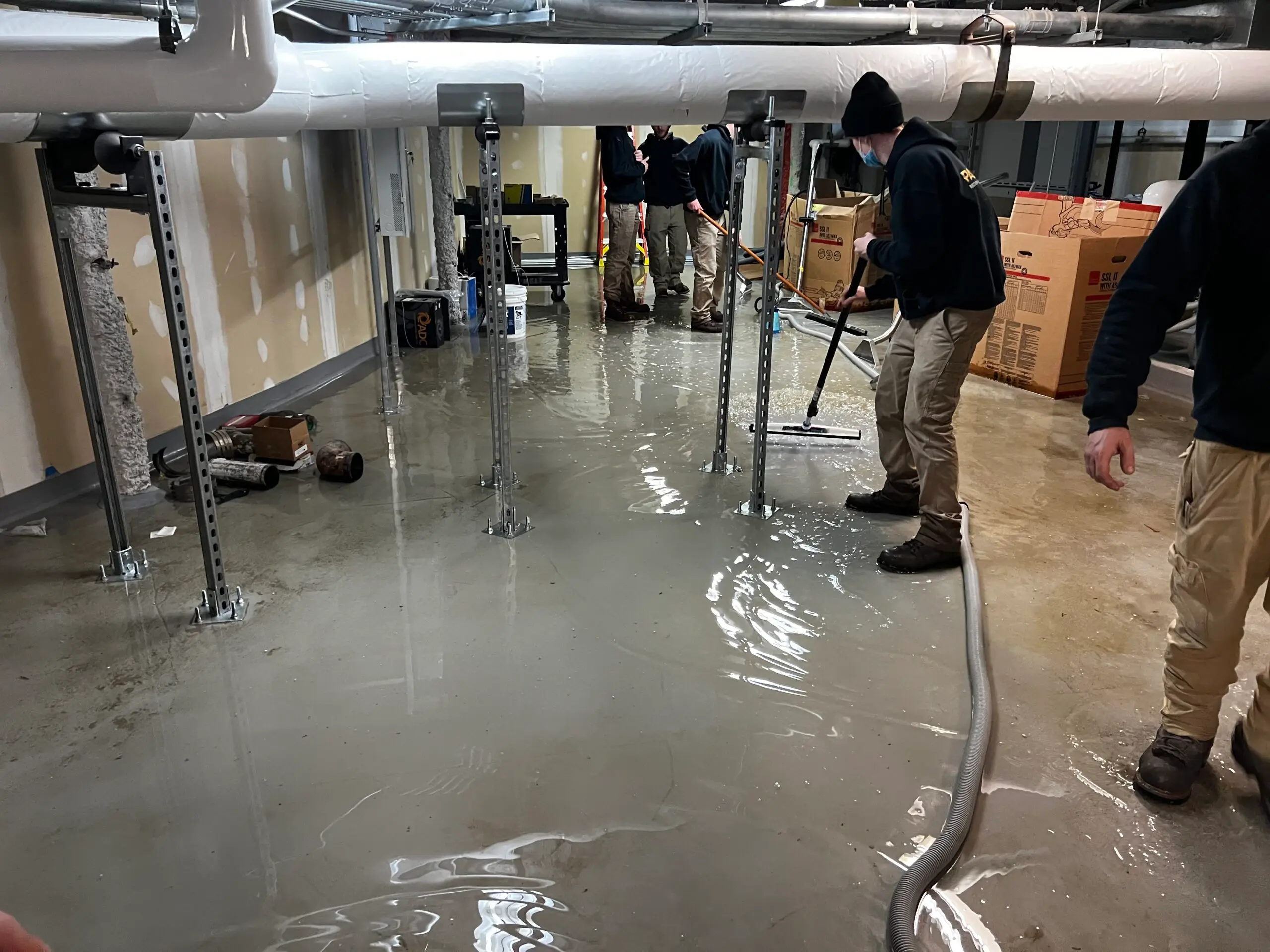
Winter weather adds a seasonal dimension to Newark's water damage risk profile. Wise County sits far enough north that hard freezes are more frequent and more prolonged than in central Tarrant County. When temperatures drop into the teens—as they did during the catastrophic February 2021 winter storm that affected all of North Texas—older homes with inadequate insulation around exterior supply lines are highly vulnerable to pipe bursts. Newark's rural character means some properties have outbuildings, workshops, and unheated structures with active plumbing, all of which are prime candidates for freeze damage. Emergency water extraction following freeze-related pipe bursts must begin immediately, as the volume of water released by a failed 3/4-inch supply line can fill a room's flooring system with hundreds of gallons within minutes. Our crews carry industrial-capacity truck-mounted extractors capable of removing large volumes of standing water rapidly.
Managing water damage in a small community like Newark also means navigating the insurance landscape without the resources available in larger cities. Not all restoration companies serve Wise County with the same urgency they bring to densely populated Tarrant County neighborhoods. 2 Brothers Restoration covers Newark and the surrounding Eagle Mountain Lake corridor as part of our core Fort Worth metro service area, and our team helps homeowners work through insurance claims from initial documentation through final settlement. We understand that for Newark homeowners, a water damage event represents a significant disruption to the quiet, community-focused way of life that makes this lakeside town worth protecting. From storm damage restoration following a spring storm surge to emergency plumbing failure response, our Newark-area teams are ready to respond 24 hours a day, seven days a week. For Eagle Mountain Lake-area homeowners, that responsiveness is not a luxury—it is a necessity. When water damage begins in a lakeside community with elevated groundwater tables and clay-soil foundations already under seasonal stress, every hour of delayed response compounds the structural impact and drives up the total cost of recovery. Our Newark-area response team understands the specific characteristics of Wise County construction and hydrology, and we treat each home in this tight-knit community with the detailed care that a high-value lakeside property deserves.
Neighborhoods We Serve in Newark
Common Water Damage Risks in Newark
- Lake-proximity flooding
- Flash floods from intense rainfall
- Foundation settlement from expansive clay
- Crawl space moisture
- Plumbing failures in older homes