
Mold Remediation in Fort Worth: What to Expect (Process, Timeline, and Cost)
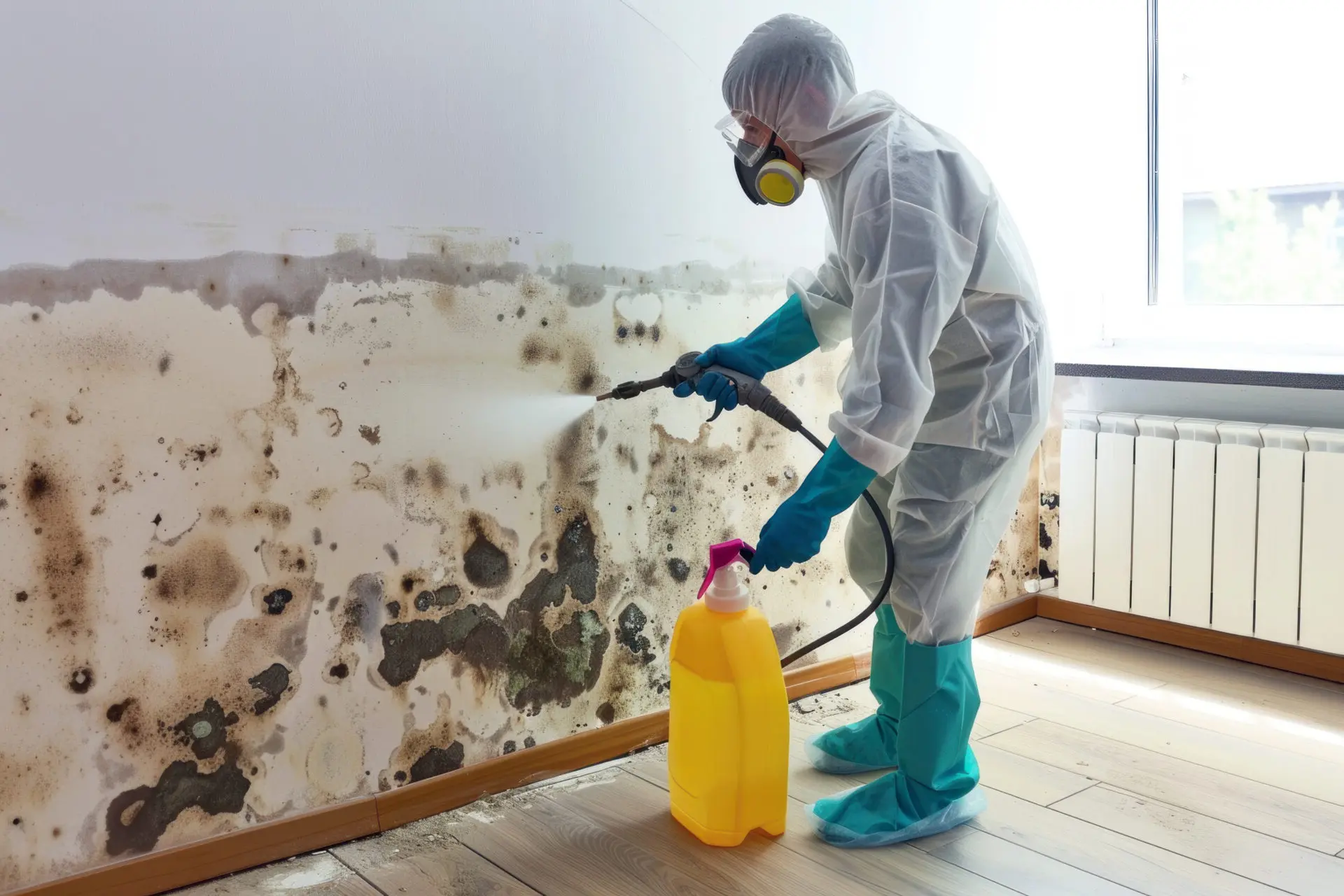
Water Damage and Mold: The 24-Hour Clock
When water damage occurs in a Fort Worth home — whether from a burst pipe, appliance leak, roof intrusion, or flooding — a countdown begins immediately. Mold spores are present in virtually every indoor environment. Under normal conditions they are harmless. But introduce sustained moisture and the right temperature, and those spores begin colonizing within 24 to 48 hours. Fort Worth's warm, humid summers accelerate the process: mold that might take three days to establish in a cooler, drier climate can take root in less than 36 hours here from June through September.
This is why water damage restoration companies emphasize rapid drying above almost everything else — it is the most effective mold prevention strategy available. But when drying is delayed, incomplete, or water gets trapped inside wall cavities and under flooring, mold growth is often inevitable even after the visible water is gone.
Mold Hides Where You Cannot See It
One of the most persistent misconceptions Fort Worth homeowners have about mold is that they will be able to see it. In reality, a significant portion of post-water-damage mold growth occurs in locations that are invisible during a casual inspection: inside wall cavities behind drywall, under engineered wood subfloors, inside HVAC ductwork that circulated humid air after a flooding event, in attic insulation where a roof leak was not fully addressed, and in the framing and sheathing beneath siding on exterior walls.
Air quality testing and invasive inspection — carefully opening wall cavities to inspect framing — are often necessary to determine the true extent of a mold problem. Visible surface mold on a wall is frequently the tip of a much larger colony growing in the cavity behind it.
What Professional Mold Remediation Involves
Professional mold remediation is a defined process, not simply spraying a surface with a cleaning product. A qualified remediation company follows these steps:
- Inspection and air sampling. A technician assesses visible mold, takes air quality samples, and uses moisture meters to identify wet materials. Air samples are sent to a certified laboratory to identify mold species and spore concentrations.
- Containment. The affected area is sealed off from the rest of the home using heavy plastic sheeting and negative air pressure (the airflow inside the containment zone is directed outward through HEPA filtration, preventing spores from spreading to unaffected areas).
- Removal of affected materials. Porous materials that cannot be cleaned — drywall, insulation, carpet padding, and in severe cases engineered wood subfloor — are removed and disposed of in sealed bags. Non-porous surfaces like framing lumber can often be cleaned in place.
- HEPA vacuuming and antimicrobial treatment. All surfaces within the containment zone are HEPA-vacuumed to capture residual spores, then treated with an EPA-registered antimicrobial agent.
- Clearance testing. After remediation is complete, a post-clearance air sample is collected and sent to the lab. Remediation is not considered complete until the spore count returns to normal background levels.
Timeline: How Long Does Mold Remediation Take?
For a residential mold remediation in a Fort Worth home, the active remediation work — containment, removal, cleaning, and treatment — typically takes three to seven days depending on the scope. A small, isolated mold problem in a bathroom or laundry room may be resolved in two to three days. A more extensive situation involving multiple rooms, wall cavity contamination, or HVAC involvement can take a week or more.
After the active remediation, clearance test results typically take one to two business days. If the clearance passes, the containment comes down and reconstruction of removed materials can begin. Total timeline from first call to cleared-for-rebuild is often ten to fourteen days for moderate cases.
Cost: What Fort Worth Homeowners Should Budget
Mold remediation costs vary enormously based on scope. Isolated surface mold in a bathroom or around a window can be addressed for $500 to $1,500. A more typical residential water-damage-related remediation involving wall cavities in one or two rooms runs $2,000 to $4,000. Extensive situations with widespread contamination — a flooded basement, long-running slab leak damage, or a roof leak that went unaddressed for a season — can reach $5,000 to $10,000 or more when structural material removal and reconstruction are factored in.
Homeowner's insurance generally covers mold remediation when the mold resulted from a covered water event (a burst pipe, appliance failure, storm damage). Mold caused by long-term neglect or a maintenance failure is typically excluded. Document the connection between your water damage event and the mold growth carefully — the remediation company's report should clearly establish that connection for your insurer.
Why DIY Mold Removal Falls Short
Bleach is often cited as a DIY mold treatment, and it does kill surface mold on non-porous materials like tile. But mold grows on porous materials — drywall, wood framing, insulation — and bleach does not penetrate those surfaces deeply enough to kill the root structure. More critically, disturbing a mold colony without proper containment releases enormous quantities of spores into the air, which then settle throughout the home and begin new colonies wherever moisture exists. DIY remediation of anything beyond the smallest visible surface mold patch almost always makes the problem worse.
If you have experienced water damage in your Fort Worth home and are concerned about mold, contact 2 Brothers Restoration for a professional assessment. Our mold remediation team uses certified inspection protocols and will give you an honest evaluation of what your home needs. Learn more about water damage restoration and how we coordinate with insurance adjusters to document mold claims properly. Call us today to schedule an inspection.
Get Priority Response
Step 1 of 3Have an Emergency?
Do not let water damage sit. We are available 24/7 to take your call.
(817) 607-3264