
Structural Drying: What It Is and Why It Matters
Structural Drying: What It Is and Why It Matters
After a water damage event, most homeowners focus on what they can see: the standing water on the floor, the soaked carpet, the dripping ceiling. But the real threat lives inside the materials you cannot see. Structural drying is the process of removing trapped moisture from your home's framing, subfloors, drywall, and other building materials, and it is the single most important phase of any water damage restoration project.
At 2 Brothers Restoration, we invest heavily in structural drying equipment and technician training because we know from experience that this phase determines whether your home truly recovers or suffers ongoing problems for years to come.
Why Surface Drying Is Not Enough
Many homeowners make the mistake of thinking that once the visible water is gone, the problem is solved. They mop up the puddles, set out a few fans, and move on. Unfortunately, water behaves like a slow-moving invasion force. When water contacts porous building materials, it is absorbed through a process called wicking. A single inch of standing water on a floor can wick up into drywall 12 to 18 inches above the waterline. It can saturate the carpet pad underneath the carpet. It can penetrate the concrete slab or plywood subfloor and travel along floor joists into entirely different rooms.
This hidden moisture creates three serious problems:
- Mold growth: Mold needs only moisture, an organic food source (like drywall paper or wood), and temperatures between 60 and 80 degrees to thrive. A Fort Worth home provides all three year-round. Mold can begin growing within 24 to 48 hours of a water event.
- Structural deterioration: Prolonged moisture exposure weakens wood framing, causes subfloors to delaminate, and degrades the integrity of drywall. Over time, you may notice sagging ceilings, soft spots in floors, or walls that feel spongy to the touch.
- Odor and indoor air quality issues: Trapped moisture produces persistent musty odors and can contribute to respiratory problems, especially for residents with allergies or asthma.
How Professional Structural Drying Works
Professional structural drying is a science-driven process that follows the principles established by the Institute of Inspection, Cleaning and Restoration Certification (IICRC). Here is how we approach it:
Step 1: Moisture Mapping
Before placing a single piece of equipment, our technicians use moisture meters and thermal imaging cameras to map the full extent of moisture intrusion. We check every wall, floor, and ceiling in the affected area and adjacent rooms. This map becomes our battle plan and our benchmark for tracking drying progress.
Step 2: Creating the Drying Environment
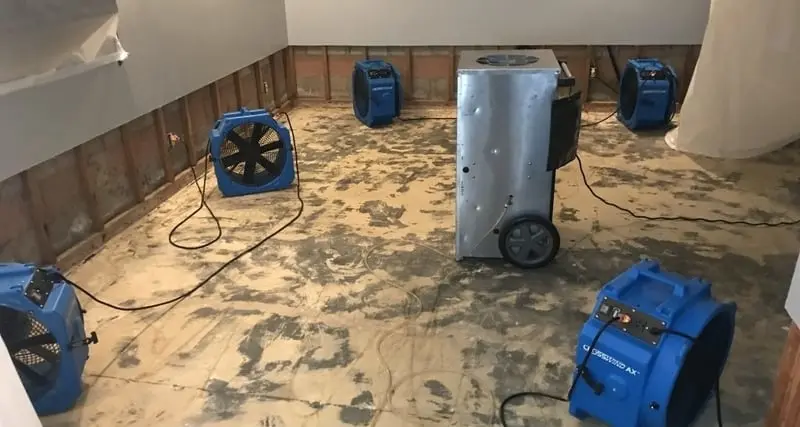
Effective drying requires controlling three variables: temperature, humidity, and airflow. We create an engineered drying environment using a combination of equipment:
- Air movers: These high-velocity fans are positioned at precise angles to create airflow across wet surfaces. The moving air accelerates evaporation from the surface of wet materials, pulling moisture out of the structure and into the air.
- Commercial dehumidifiers: As moisture evaporates from building materials, it enters the air. Dehumidifiers capture this airborne moisture and drain it away. Without dehumidification, you are simply moving moisture around rather than removing it.
- Specialty equipment: Depending on the situation, we may deploy wall cavity drying systems that inject warm, dry air directly behind walls, floor mat systems that draw moisture through hardwood floors, or heat drying systems for severely saturated concrete slabs.
Step 3: Daily Monitoring
Structural drying is not a set-it-and-forget-it process. Our technicians return daily to take moisture readings at every mapped point. We record these readings in a drying log that documents the progress over time. Based on the data, we adjust equipment placement, add or remove units, and modify the drying environment to optimize performance.
This daily monitoring is what separates professional restoration from amateur attempts. Without data, you are guessing when to stop. With data, you know precisely when every material has reached its dry standard.
Step 4: Verification and Documentation
We do not consider the job complete until moisture readings confirm that all affected materials have returned to acceptable levels, typically matching the moisture content of unaffected materials in the same home. This final verification is documented and provided to you and your insurance company.
The Drying Science Behind Different Materials
Different building materials dry at very different rates, and understanding this is essential for effective structural drying:
- Drywall: Standard drywall can often be saved if drying begins within 24 to 48 hours. The paper facing dries relatively quickly, but the gypsum core can hold moisture longer. If drywall remains wet too long, it loses structural integrity and must be replaced.
- Hardwood floors: Wood flooring is particularly sensitive to moisture. Rapid drying can save hardwood in many cases, but the key is applying even heat and controlled airflow to prevent the wood from cupping or crowning as it dries.
- Concrete: Concrete slabs are extremely dense and can hold moisture for weeks. Slab drying often requires specialized equipment like desiccant dehumidifiers or heat-injection systems that can penetrate deep into the material.
- Insulation: Fiberglass batt insulation trapped in wall cavities can hold enormous amounts of water. In many cases, saturated insulation must be removed because it cannot be dried effectively in place.
Why Fort Worth Homes Need Expert Drying
The Fort Worth climate presents unique challenges for structural drying. Our hot, humid summers mean that outdoor humidity levels can exceed 70 percent, which works against the drying process. Without commercial-grade dehumidification, moisture that evaporates from wet building materials simply recondenses in other areas of the home.
Additionally, many Fort Worth homes are built on concrete slab foundations, which are notoriously slow to dry. Slab-on-grade construction also means that water from burst pipes or flood events has nowhere to drain naturally, so it spreads laterally under flooring and seeps into every available space.
What Happens When Structural Drying Is Skipped
We frequently receive calls from homeowners who tried to handle water damage themselves or hired an inexperienced company that pulled equipment too early. The symptoms usually appear weeks or months later:
- Mold growth behind baseboards or inside wall cavities
- Warped or buckled flooring
- Persistent musty smells that no amount of cleaning can eliminate
- Peeling paint and bubbling drywall
- Secondary damage requiring far more extensive and expensive repairs than the original event
In many of these cases, the homeowner ends up paying significantly more than they would have if professional structural drying had been performed from the start. Insurance companies also take note when secondary damage occurs and may deny claims for damage that resulted from inadequate initial restoration.
How Long Does Structural Drying Take?
Most residential structural drying projects in the Fort Worth area take three to five days. However, complex situations involving multiple floors, concrete slab saturation, or heavily insulated wall cavities may require seven or more days. Our team never removes equipment based on a schedule. We remove it based on verified moisture data.
Throughout the process, we keep you informed with daily progress updates and are available to answer any questions. We understand that having industrial equipment in your home is disruptive, and we work to minimize that disruption while ensuring thorough drying.
If your home has experienced water damage and you are unsure whether proper structural drying was performed, call 2 Brothers Restoration for a moisture assessment. We can quickly determine whether hidden moisture remains and recommend next steps to protect your home.
Get Priority Response
Step 1 of 3Have an Emergency?
Do not let water damage sit. We are available 24/7 to take your call.
(817) 607-3264