
What to Do After a Sewage Backup in Your Home
What to Do After a Sewage Backup in Your Home
Of all the water damage emergencies we respond to, sewage backups are among the most distressing for homeowners. The combination of foul odors, visible contamination, and the knowledge that raw sewage contains dangerous pathogens makes these events uniquely stressful. A sewage backup is classified as Category 3 water damage, the most severe classification in the restoration industry, and it requires immediate professional intervention. This is not a situation where you can handle cleanup yourself with a mop and some bleach.
If you are currently dealing with a sewage backup, stop reading after the safety section below, follow those steps, and call a professional immediately. You can come back and read the rest later. Your health and safety come first.
Immediate Safety Steps
The moment you discover sewage in your home, take these actions in order:
Evacuate the affected area. Get all people and pets out of rooms with sewage contamination. Close doors to prevent contaminated air from spreading to unaffected areas of the home. Do not allow anyone to walk through the sewage, especially children who may touch contaminated surfaces and then touch their faces.
Turn off electricity. If sewage has reached electrical outlets, appliances, or your HVAC system, shut off the breaker for those areas. If the breaker panel is in the contaminated zone, call your electric utility for an emergency disconnect. Sewage water is highly conductive and creates a severe electrocution risk.
Do not flush toilets or run water. If the backup is caused by a main sewer line blockage, additional water flowing into the system will make the backup worse. Do not flush any toilet, run any sink, or use the dishwasher or washing machine until the blockage is cleared.
Ventilate the area if safe to do so. Open windows in and near the affected area to reduce the concentration of airborne contaminants and methane gas. However, do not turn on your central HVAC system, as this can distribute contaminated air through the ductwork to every room in your home.
Call a professional restoration company. Sewage cleanup requires specialized protective equipment, commercial-grade disinfectants, and proper disposal procedures. Call a company experienced in Category 3 water damage restoration immediately.
Understanding the Health Risks
Sewage is not just dirty water. It is a biohazard that contains a concentration of dangerous organisms. Raw sewage commonly contains E. coli, salmonella, hepatitis A virus, giardia, cryptosporidium, and numerous other bacteria, viruses, and parasites. Exposure can occur through skin contact, ingestion, or inhalation of contaminated aerosols.
Health effects of sewage exposure can range from mild gastrointestinal distress to serious infections requiring hospitalization. Individuals with compromised immune systems, young children, and the elderly are at the highest risk. Even healthy adults can develop serious illness from sewage exposure.
The airborne hazards are often underestimated. Sewage releases hydrogen sulfide and methane gases, which can cause headaches, nausea, dizziness, and in enclosed spaces at high concentrations, loss of consciousness. This is why ventilation is important and why you should not spend extended time in the affected area without proper respiratory protection.
What Causes Sewage Backups
Understanding the cause of the backup helps determine the appropriate response and prevention strategy.
- Main sewer line blockage: Tree roots, accumulated grease, and collapsed pipe sections are the most common causes. This typically causes sewage to back up through the lowest drain in the home, usually a basement floor drain, ground-floor toilet, or shower.
- City sewer system overload: During heavy storms, municipal sewer systems can become overwhelmed, causing sewage to back up into connected homes. This is more common in older neighborhoods with combined storm and sewer lines.
- Sump pump or ejector pump failure: Homes with below-grade plumbing rely on ejector pumps to lift sewage to the main sewer line. When these pumps fail, sewage accumulates and eventually overflows.
- Septic system failure: Homes on septic systems can experience backups when the tank is full, the drain field is saturated, or the system has a mechanical failure.
- Clogged lateral line: Flushing inappropriate items like wipes, feminine hygiene products, or excessive grease can block the lateral line connecting your home to the main sewer.
The Professional Sewage Cleanup Process
Professional sewage cleanup follows a rigorous protocol designed to make your home safe for occupancy again. Here is what you should expect:
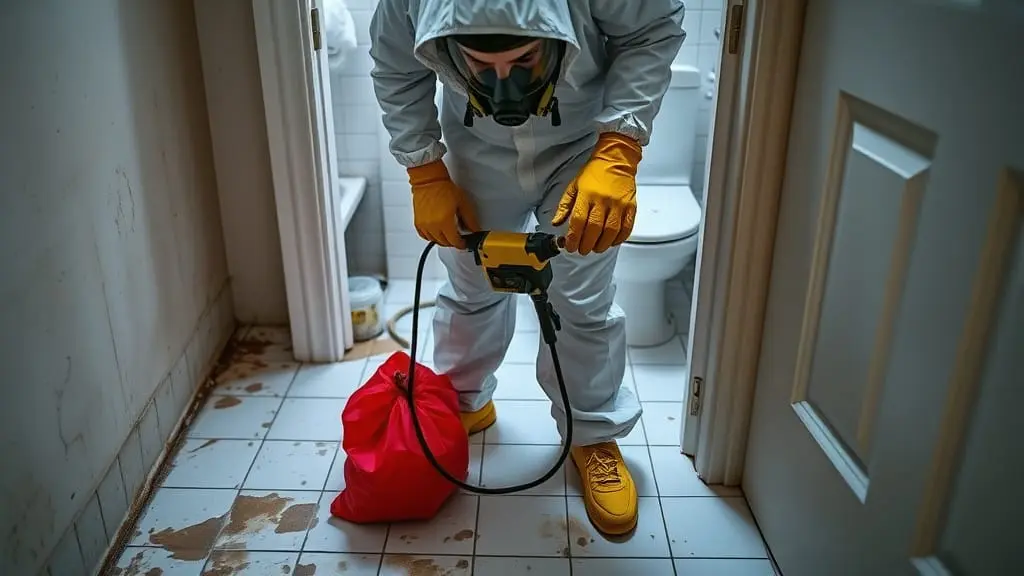
Assessment and containment. Technicians arrive in full personal protective equipment including Tyvek suits, rubber boots, nitrile gloves, and HEPA-filtered respirators. They assess the extent of the contamination and establish containment barriers to prevent cross-contamination of unaffected areas. Negative air machines with HEPA filters are set up to capture airborne contaminants.
Sewage extraction. All standing sewage water is extracted using specialized pumps and extractors. This equipment is dedicated to Category 3 water and is not used for clean water extraction, preventing cross-contamination. The extracted sewage is disposed of according to local regulations.
Removal of contaminated materials. Porous materials that have absorbed sewage cannot be adequately disinfected and must be removed and disposed of. This typically includes carpet, carpet padding, drywall up to at least 12 inches above the visible water line, insulation, and any personal belongings that are porous and have been in contact with sewage. Hard, non-porous items can often be cleaned and disinfected.
Cleaning and disinfection. All remaining surfaces are cleaned with commercial-grade antimicrobial agents that kill the full spectrum of pathogens found in sewage. This is not a single-pass process. Surfaces are cleaned, treated with disinfectant, allowed to dwell for the required contact time, and then cleaned again. EPA-registered products specifically designed for Category 3 water damage are used.
Structural drying. After decontamination, the affected structure must be dried thoroughly using the same industrial dehumidification and air-moving equipment used in standard water damage restoration. The drying process is critical because any residual moisture can support the growth of mold and bacteria in the decontaminated structure.
Verification testing. Reputable restoration companies will conduct post-remediation testing to verify that the affected area is free of contamination. This may include ATP (adenosine triphosphate) swab testing of surfaces and air quality testing to confirm that the space is safe for reoccupation.
What About Your Belongings
One of the most difficult aspects of a sewage backup is the loss of personal belongings. The reality is that most porous items that have been in direct contact with raw sewage cannot be safely restored. This includes clothing, bedding, upholstered furniture, mattresses, paper items, and stuffed toys. Hard, non-porous items such as dishes, glass, metal furniture, and some electronics can often be professionally cleaned and disinfected.
Document all items that need to be discarded for your insurance claim. Take photos showing the contamination on each item before disposal. Your insurance company will need this documentation to process your claim for personal property losses.
Insurance and Sewage Backups
Standard homeowners insurance policies typically do not cover sewer backup damage by default. However, many insurers offer a sewer backup endorsement or rider that you can add to your policy, usually for a modest annual premium. If you already have this endorsement, your cleanup and restoration costs should be covered subject to the endorsement limit.
If you do not have sewer backup coverage, you may still have options. If the backup was caused by a city sewer system failure, the municipality may have liability. If it was caused by a contractor or neighbor's actions, their liability insurance may cover your damages. Consult with your insurance agent to understand your options.
Preventing Future Sewage Backups
- Install a backwater prevention valve on your main sewer line. This one-way valve allows sewage to flow out but prevents it from flowing back into your home.
- Have your sewer lateral line camera-inspected every few years to identify tree root intrusion or pipe deterioration before they cause a complete blockage.
- Never pour cooking grease down drains. Grease solidifies in sewer lines and is a leading cause of blockages.
- Only flush toilet paper. Do not flush wipes of any kind, even those labeled as flushable, as they do not break down like toilet paper and contribute to blockages.
- Install a battery backup on your sump pump or ejector pump so it continues operating during power outages, which often coincide with the heavy storms most likely to overload sewer systems.
- Add sewer backup coverage to your homeowners insurance policy if you do not already have it. The annual premium is typically far less than the cost of a single cleanup.
If you are dealing with a sewage backup in the Fort Worth area, do not attempt to handle it yourself. Call 2 Brothers Restoration for immediate, professional sewage cleanup service. We respond around the clock and have the equipment, training, and experience to make your home safe again.
Get Priority Response
Step 1 of 3Have an Emergency?
Do not let water damage sit. We are available 24/7 to take your call.
(817) 607-3264