
Can Water-Damaged Hardwood Floors Be Saved?
Can Water-Damaged Hardwood Floors Be Saved?
Hardwood floors are one of the most sought-after features in Fort Worth homes, adding beauty, warmth, and significant resale value. So when water damage strikes, one of the first questions homeowners ask is whether their hardwood can be saved. The good news is that in many cases, the answer is yes, but timing and technique are everything.
At 2 Brothers Restoration, we have saved hardwood floors that homeowners had already written off as destroyed, and we have also been honest when replacement was the better option. Here is how we evaluate the situation and what determines the outcome.
How Water Damages Hardwood Floors
Wood is a hygroscopic material, meaning it naturally absorbs and releases moisture in response to its environment. This is normal and is the reason hardwood floors expand slightly in humid summers and contract in dry winters. Problems arise when wood absorbs far more moisture than its environment can balance.
When water sits on or under hardwood flooring, the wood fibers absorb it unevenly. The side facing the water absorbs first, causing the wood to expand in that direction. This uneven absorption creates the visible distortions that characterize water-damaged hardwood:
- Cupping: The edges of individual boards rise higher than the center, creating a concave shape. This happens when the bottom of the board absorbs more moisture than the top, which is typical when water comes from below through the subfloor.
- Crowning: The opposite of cupping, where the center of each board is higher than the edges. This can occur when surface water is absorbed from above, or as a rebound effect after improperly dried cupped floors.
- Buckling: In severe cases, the wood swells so much that it lifts entirely off the subfloor. Buckling usually indicates prolonged water exposure or a massive volume of water.
- Discoloration and staining: Water can cause dark staining on hardwood, especially if the water contained contaminants. Tannins in oak react with minerals in water to produce black stains.
The Critical Factor: How Quickly You Act
The single biggest factor in saving hardwood floors is response time. If emergency water extraction begins within the first few hours of a water event, the chances of saving the floor are excellent. The longer water sits on or under the wood, the deeper it penetrates and the more severe the distortion becomes.
Here is a general timeline based on our experience in the Fort Worth area:
- 0 to 24 hours: High chance of full recovery. The wood has absorbed moisture but has not yet undergone permanent cellular changes. Professional drying techniques can extract the moisture and allow the wood to return to its original profile.
- 24 to 72 hours: Moderate chance of recovery. Cupping is likely present and may be significant, but controlled drying can still reverse most of the damage. Some boards may need individual replacement.
- 72 hours to one week: Recovery becomes more difficult. Extensive cupping and possible buckling may be present. Mold may have begun growing on the underside of the wood. Partial salvage may be possible, but full replacement of the most damaged sections is likely.
- Beyond one week: Full recovery is unlikely for the heavily affected areas. The wood has likely undergone permanent damage, and mold is almost certainly present. Replacement is usually the most cost-effective option at this point.
Our Hardwood Floor Drying Process
When we determine that hardwood floors can be saved, we use a specialized drying approach that differs from standard structural drying:
Step 1: Water Extraction
We begin with thorough water extraction using weighted extractors designed specifically for hard surfaces. These tools apply pressure to pull water up through the grain of the wood and from the gaps between boards.
Step 2: Floor Drying Systems
We deploy floor mat drying systems, which are specialized panels placed directly on the hardwood surface. These mats create a vacuum that gently draws moisture upward through the wood. This is a far more effective and controlled method than simply blowing air across the surface, which can cause the top of the wood to dry faster than the bottom, leading to crowning.
Step 3: Controlled Environment
The room temperature and humidity are carefully controlled using commercial dehumidifiers. The goal is to create even drying conditions so the wood dries uniformly from top to bottom and edge to edge. Uneven drying is what causes permanent warping.
Step 4: Daily Monitoring
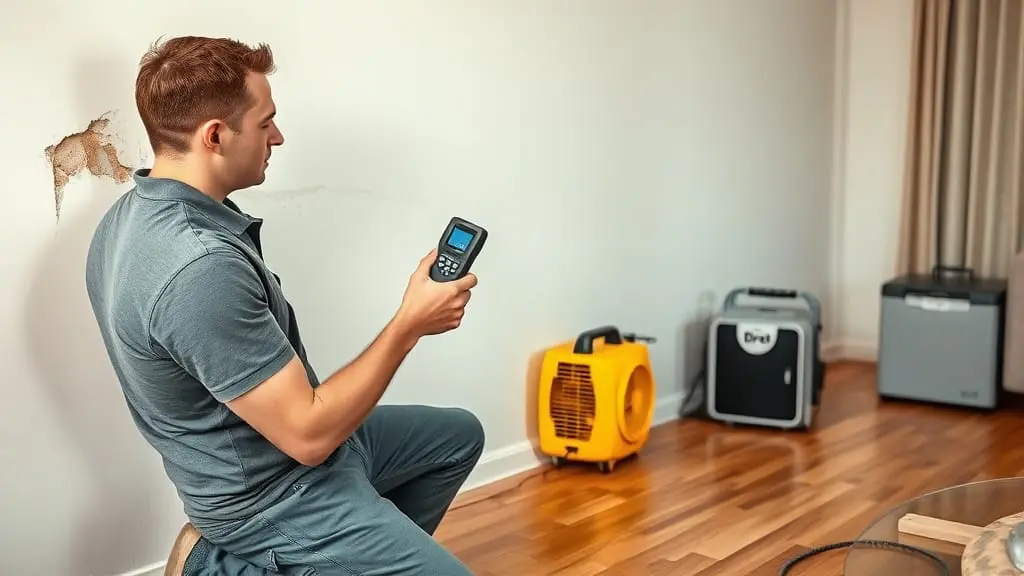
We take moisture readings of the wood daily using pin-type moisture meters. We measure at multiple points across the floor and compare the readings to unaffected wood in other areas of the home. This gives us an objective target for when drying is complete.
Step 5: Acclimation Period
Even after the wood reaches acceptable moisture levels, we recommend an acclimation period before any refinishing work. The wood needs time to stabilize and settle back into its natural profile. Sanding a floor too soon after drying can result in an uneven surface once the wood fully adjusts.
When Replacement Is the Better Option
Despite our best efforts, there are situations where saving hardwood floors is not practical or cost-effective:
- Severe buckling: When boards have lifted completely off the subfloor and broken their tongue-and-groove connections, they cannot be reinstalled and must be replaced.
- Contaminated water: If the water came from a sewage backup or floodwater containing biological contaminants, the wood may be unsafe to keep even if it could be dried. Health standards require removal of porous materials exposed to Category 3 water.
- Delamination: Engineered hardwood consists of a thin veneer bonded to a plywood substrate. When the layers separate due to prolonged water exposure, the damage is irreversible.
- Extensive mold: If mold has colonized the underside of the hardwood and the subfloor beneath it, removal is necessary for both structural and health reasons.
- Subfloor damage: Even if the hardwood itself can be saved, a damaged subfloor underneath must be addressed. In some cases, removing the hardwood to repair the subfloor and reinstalling it is more expensive than installing new flooring.
Matching and Replacing Individual Boards
In many water damage situations, only a portion of the floor is damaged beyond recovery. In these cases, we can replace individual boards or sections while preserving the rest of the floor. Matching species, grain pattern, and stain color requires skill and experience, but when done correctly, the repaired area blends seamlessly with the existing floor.
Preventing Future Water Damage to Your Hardwood
Once your floors are restored, take these steps to protect them:
- Install water leak detectors near appliances, under sinks, and near water heaters
- Know the location of your main water shut-off valve
- Inspect washing machine hoses and dishwasher connections annually
- Keep humidity levels between 35 and 55 percent year-round
- Address any plumbing leaks immediately, no matter how small
If your hardwood floors have been exposed to water, do not wait to see if they recover on their own. Call 2 Brothers Restoration immediately for a professional assessment. The faster we respond, the better the chance we can save your floors and avoid a costly full replacement.
Get Priority Response
Step 1 of 3Have an Emergency?
Do not let water damage sit. We are available 24/7 to take your call.
(817) 607-3264