
How Long Does Water Damage Restoration Take?
How Long Does Water Damage Restoration Take?
One of the first questions Fort Worth homeowners ask after a flood, burst pipe, or appliance leak is: "How long is this going to take?" It is a fair question. Your life has been disrupted, and you want to get back to normal as quickly as possible. The honest answer is that every situation is different, but we can give you a reliable framework for what to expect at each stage of the restoration process.
At 2 Brothers Restoration, we have handled hundreds of water damage projects across the Fort Worth metro area, and we have found that most residential jobs follow a predictable timeline once our team arrives on site. Below, we break down the major phases and how long each one typically takes.
Phase 1: Emergency Response and Assessment (Day 1)
The clock starts the moment you call us. Our team is dispatched for emergency water extraction and typically arrives within 1 hour in the Fort Worth area. The first visit involves several critical tasks:
- Safety evaluation: We check for electrical hazards, structural instability, and contaminated water before anyone enters the affected area.
- Source identification: If the water source has not already been stopped, we help identify and address it. A running supply line or active roof leak must be resolved before restoration can begin.
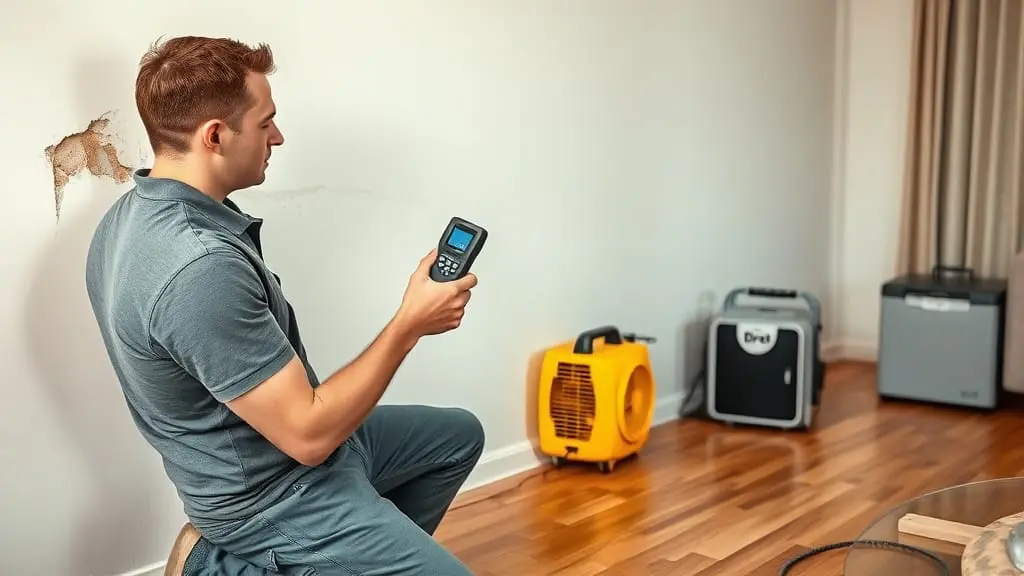
- Damage assessment: Using moisture meters and infrared cameras, we map the full extent of water migration. Water travels along unexpected paths, so the damage area is often larger than what you can see.
- Documentation: We photograph and catalog all damage for your insurance claim. This thorough documentation protects you during the claims process.
This initial phase typically takes two to four hours, depending on the size of the property and the complexity of the damage.
Phase 2: Water Extraction (Day 1-2)
Once we understand the full scope, we begin removing standing water. Our truck-mounted extractors can remove thousands of gallons per hour, and portable units handle hard-to-reach spaces like closets and crawlspaces.
For a typical residential water damage event, such as a burst pipe that flooded two or three rooms, extraction takes between four and eight hours. Larger losses involving an entire floor or a commercial property may take one to two full days. The key is removing as much bulk water as possible before we transition to the drying phase.
During extraction, we also remove saturated materials that cannot be saved. Wet carpet padding, for example, is almost always discarded because it holds moisture like a sponge and becomes a breeding ground for bacteria and mold.
Phase 3: Structural Drying (Days 2-5)
This is typically the longest phase and the one that requires the most patience. After the visible water is gone, significant moisture remains trapped inside walls, subfloors, cabinetry, and other structural materials. Our water damage restoration process uses industrial-grade air movers and dehumidifiers to pull this hidden moisture out.
The standard drying period is three to five days, but several factors influence this timeline:
- Material types: Hardwood floors, plaster walls, and concrete slabs hold moisture longer than drywall or laminate.
- Saturation level: A slow leak that soaked materials for weeks takes longer to dry than a sudden burst that was caught within hours.
- Ambient conditions: Fort Worth summers bring high humidity, which can slow drying if not properly managed with commercial dehumidification.
- Airflow and access: Tight spaces, multi-story damage, and areas with limited ventilation require more equipment and more time.
Our technicians visit daily during the drying phase to take moisture readings and adjust equipment placement. We never remove equipment based on a calendar. We remove it based on verified moisture data confirming the materials have reached acceptable dryness levels.
Phase 4: Cleaning and Sanitization (Days 5-6)
Once the structure is dry, we clean and sanitize all affected surfaces. This is especially critical when the water source involved contaminants, such as sewage backups or flood water from storms. Antimicrobial treatments are applied to prevent mold growth, and HEPA air scrubbers are used to filter any remaining airborne particles.
For clean water losses like a broken supply line, this phase takes about one day. For contaminated water events, it may take two to three days because every surface that contacted the water must be thoroughly disinfected.
Phase 5: Reconstruction and Repairs (Days 7-14+)
If drywall, flooring, cabinetry, or other building materials were removed during the restoration process, they will need to be replaced. This reconstruction phase varies the most in duration. A minor repair such as replacing a section of drywall and repainting might take two to three days. A full kitchen or bathroom rebuild could take two to four weeks.
2 Brothers Restoration handles the entire process from start to finish, so you do not have to coordinate between a restoration company and a separate contractor. We manage demolition, reconstruction, painting, and flooring installation under one roof.
What Factors Speed Things Up?
While you cannot control everything, certain actions can significantly shorten the overall timeline:
- Call immediately: The sooner we start extraction, the less moisture penetrates your building materials, and the shorter the drying period will be.
- Shut off the water source: If a pipe burst, close the main shut-off valve before we arrive. Every minute the water flows adds to the damage.
- Keep the HVAC running: Your air conditioning system helps control humidity. Do not turn it off during the drying process unless our team advises otherwise.
- Provide access: Let our team move furniture and open wall cavities as needed. Restricting access to wet areas slows the drying process considerably.
What About Mold?
One of the biggest reasons timing matters is mold. Mold spores can begin colonizing damp materials within 24 to 48 hours. If a water event is not addressed promptly, a straightforward drying job can turn into a full mold remediation project, adding days or even weeks to the timeline and significantly increasing costs.
This is why we emphasize our rapid response capability. Getting professional drying equipment in place within the first day dramatically reduces the risk of secondary mold damage.
Typical Timeline Summary
- Emergency response and extraction: Day 1
- Structural drying: Days 2 through 5
- Cleaning and sanitization: Days 5 through 6
- Reconstruction: Days 7 through 14 or longer
A straightforward water damage event with no contamination and no major reconstruction can be fully resolved in about a week. More complex losses involving multiple rooms, contaminated water, or significant structural repairs typically take two to four weeks from start to finish.
If you are dealing with water damage in the Fort Worth area and want to understand your specific timeline, call 2 Brothers Restoration for a free assessment. The sooner we start, the faster you get your home back.
Get Priority Response
Step 1 of 3Have an Emergency?
Do not let water damage sit. We are available 24/7 to take your call.
(817) 607-3264