
How Fast Does Water Damage Spread? Timeline & What You Need to Know
How Fast Does Water Damage Spread? Timeline & What You Need to Know
One of the most common misconceptions about water damage is that you have plenty of time to deal with it. The truth is far more alarming. Water begins causing permanent damage to your home within minutes of contact, and every hour of delay exponentially increases the scope and cost of restoration. As water damage restoration professionals, we regularly see situations where a homeowner delayed calling for help by just a day or two and the repair bill doubled or tripled as a result.
Understanding exactly how water damage progresses through your home will help you appreciate the urgency of a fast response and make better decisions when disaster strikes.
The First Few Minutes: Immediate Absorption
Water moves fast. Within the first minutes of contact, porous materials in your home begin absorbing moisture. Carpet, carpet padding, drywall paper facing, unsealed wood, fabric, and paper products act like sponges. A single gallon of water on a carpeted floor can saturate several square feet of carpet and pad within minutes, with water wicking outward from the initial point of contact.
Drywall is particularly vulnerable. The paper facing on standard drywall begins absorbing water on contact, and the gypsum core can wick moisture upward at a rate of approximately one inch per hour. This means that even shallow standing water against a wall can result in moisture climbing two feet or more up the wall within a single day.
Hardwood floors begin responding to moisture almost immediately as well. Wood fibers absorb water and begin to swell, though visible cupping or warping may not appear for several hours. By the time you can see the warping with your naked eye, the damage is already substantial.
Within 1 to 24 Hours: Spreading and Saturation
During the first day, water continues to spread through your home via gravity and capillary action. It flows downhill, seeps through subfloor seams, travels along pipe chases, and pools in the lowest accessible areas. A second-floor leak can damage first-floor ceilings, walls, and flooring. Water that enters the wall cavity at one point can travel along framing members and emerge in a completely different room.
Within this first 24-hour window, several damaging processes are accelerating. Drywall begins to lose structural integrity as the gypsum core saturates. Particleboard shelving and cabinetry swells and begins to delaminate. Metal surfaces start to tarnish or develop surface rust. Dyes from furniture, rugs, and fabrics begin to bleed, staining carpet and other materials permanently.
Perhaps most critically, mold spores that are naturally present in the air begin to land on wet surfaces and find conditions ideal for growth. The clock is ticking on the 24-to-48-hour window before active mold colonization begins.
24 to 48 Hours: Mold Begins to Grow
This is the threshold that every restoration professional considers critical. Within 24 to 48 hours of sustained moisture exposure, mold spores germinate and begin forming colonies on organic materials. Drywall paper, wood, carpet backing, and even dust layers on hard surfaces provide sufficient nutrients for mold to thrive.
At this stage, you may not see visible mold yet, but it is actively growing at a microscopic level. The musty smell that many people associate with water damage is actually the off-gassing of volatile organic compounds produced by mold colonies. If you can smell it, mold is already present and growing.
Structural materials continue to degrade. Laminate flooring begins to separate at the seams. Subfloor materials such as oriented strand board and plywood begin to swell and lose their structural properties. Wet insulation in walls and ceilings becomes heavy, potentially sagging or even collapsing under its own weight.
48 Hours to 1 Week: Significant Structural Damage
After two days of exposure, the damage begins to multiply rapidly. Mold colonies become visible as dark spots on walls, ceilings, and baseboards. Mold growth rate increases dramatically once colonies are established because the existing colonies produce massive quantities of new spores that colonize adjacent surfaces.
Drywall that has been wet for more than 48 hours typically cannot be saved and must be removed and replaced. Wood framing can begin to develop rot, especially in areas with poor ventilation such as inside wall cavities. Metal fasteners, electrical boxes, and HVAC components develop corrosion. Paint and wall textures bubble, crack, and peel.
The cost implications are significant. What might have been a straightforward emergency water extraction and drying job within the first 24 hours can escalate to a full demolition and reconstruction project by the end of the first week.
1 to 2 Weeks: Severe and Potentially Hazardous Conditions
If water damage goes unaddressed for one to two weeks, the consequences become severe. Mold growth is now widespread and may include toxic species such as Stachybotrys chartarum, commonly known as black mold. The health risks at this stage are real, particularly for individuals with respiratory conditions, allergies, or compromised immune systems.
Structural wood members including studs, joists, and subfloor sheathing may have lost significant strength due to rot and fungal decay. Flooring materials are likely beyond salvage. Electrical wiring insulation may have degraded, creating fire hazards. The home may develop a pervasive odor that is extremely difficult to eliminate without extensive remediation.
At this stage, the restoration process involves not just drying and repair but full mold remediation with containment barriers, HEPA filtration, and antimicrobial treatments. The cost can be three to five times what it would have been with a prompt response.
Beyond 2 Weeks: Long-Term Consequences
Water damage that persists for more than two weeks can compromise the fundamental integrity of your home. Prolonged moisture exposure can weaken foundation elements, corrode structural steel connectors, and create conditions for wood-destroying organisms beyond just mold, including wood-boring insects that are attracted to moisture-damaged timber.
In extreme cases, prolonged water damage can render a home uninhabitable and require complete gut renovation. The cost difference between a 24-hour response and a two-week delay can easily be tens of thousands of dollars.
Factors That Accelerate Water Damage
- Temperature: Warm environments accelerate both mold growth and material degradation. In Texas summers, a wet building interior can become a mold incubator within hours.
- Water category: Clean water from a supply line causes less immediate material damage than gray water from appliances or black water from sewage backups. Contaminated water introduces bacteria and chemicals that accelerate deterioration and create health hazards.
- Material type: Porous materials like carpet, insulation, and unsealed wood absorb water quickly and are difficult to dry. Non-porous materials like tile and sealed concrete are more resistant but still suffer from prolonged exposure.
- Ventilation: Enclosed spaces with poor air circulation, such as inside wall cavities, under cabinets, and in crawl spaces, trap moisture and create ideal conditions for mold growth and wood rot.
- Volume of water: More water means more saturation and longer drying times. A slow drip may cause localized damage, while a burst pipe or flood can affect an entire floor of your home simultaneously.
Why Professional Response Matters
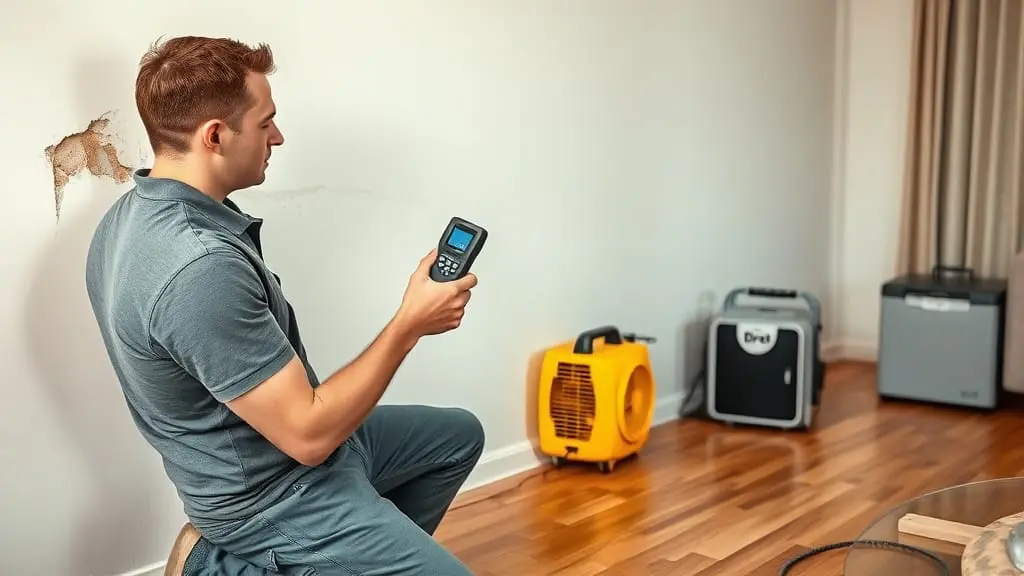
The reason professional water damage restoration is so critical is that the professional drying process is designed to outpace the timeline of damage described above. Industrial extractors remove standing water in hours rather than days. Commercial dehumidifiers and air movers can reduce relative humidity in affected areas to below 40 percent, which is below the threshold for mold growth. Moisture meters and thermal imaging cameras allow technicians to find hidden moisture that would otherwise continue causing damage unseen.
Attempting to dry a water-damaged home with household fans and dehumidifiers is like trying to bail out a boat with a teaspoon. The equipment simply is not powerful enough to remove moisture from structural materials before the damage becomes irreversible.
The Bottom Line
Every minute counts after water damage occurs. The single most important thing you can do is call a professional restoration company immediately. Not tomorrow. Not after the weekend. Now. The difference between a same-day response and even a 48-hour delay can be the difference between saving your floors, walls, and belongings and having to replace them entirely. If you are dealing with water damage right now, stop reading and call us. We respond 24 hours a day, 7 days a week, and we can be at your door within 1 hour in the Fort Worth area.
Get Priority Response
Step 1 of 3Have an Emergency?
Do not let water damage sit. We are available 24/7 to take your call.
(817) 607-3264