
Signs of Hidden Water Damage You Should Not Ignore
Signs of Hidden Water Damage You Should Not Ignore
Not all water damage announces itself with a dramatic flood or a visible burst pipe. In fact, some of the most expensive and destructive water damage we encounter as water damage restoration professionals is the kind that has been hiding behind walls, under floors, and above ceilings for weeks or even months before the homeowner notices. By the time hidden water damage becomes visible, the problem has usually progressed far beyond the initial leak, often involving mold growth, structural deterioration, and damage to multiple rooms.
Learning to recognize the early warning signs of hidden water damage can save you thousands of dollars in repairs and protect your family's health. Here are the signs you should never ignore.
Musty or Earthy Odors
Your nose is often the first detector of hidden water damage. A persistent musty, damp, or earthy smell in a room, closet, or area of your home is one of the strongest indicators of hidden moisture and mold growth. This smell is caused by microbial volatile organic compounds, which are gases produced by mold colonies as they digest organic materials like drywall paper, wood, and carpet backing.
The key word is persistent. If a room smells musty every time you enter it, even after cleaning and airing it out, the source is likely behind a wall, under the floor, or above the ceiling where you cannot see it. Bathrooms, laundry rooms, kitchens, and rooms adjacent to exterior walls are the most common locations for this type of hidden moisture.
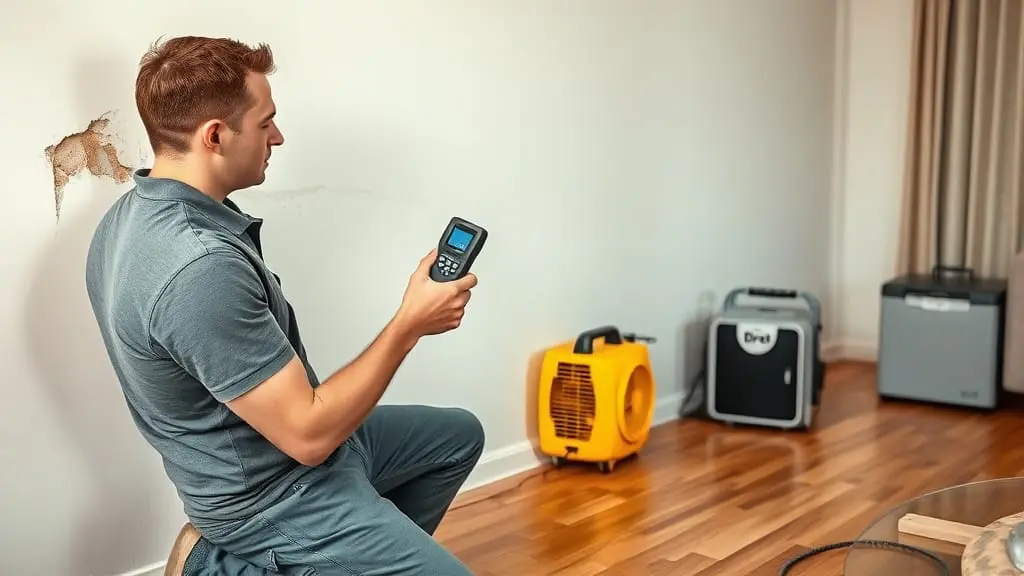
Do not mask the odor with air fresheners or candles. The smell is telling you that something is wrong, and ignoring it allows the underlying problem to grow worse. Instead, call a restoration professional who can use moisture meters and thermal imaging to locate the source of the moisture.
Discoloration on Walls and Ceilings
Water stains on walls and ceilings are sometimes obvious, appearing as brown or yellowish rings or streaks. But in their early stages, water stains can be subtle, appearing as a slight discoloration or a change in texture that is easy to overlook.
On ceilings, look for spots that appear darker or slightly different in color from the surrounding area. These may indicate a leak from a bathroom above, a roof leak, or condensation from an HVAC issue. On walls, look for areas that seem darker when viewed at an angle or in certain lighting conditions. Stains that appear near window frames often indicate failing window seals or flashing.
Important: painting over water stains does not solve the problem. If there is an active moisture source, the stain will return and the hidden damage will continue. Always identify and address the source of the moisture before making cosmetic repairs.
Peeling, Bubbling, or Cracking Paint and Wallpaper
When moisture accumulates behind a painted wall, it disrupts the bond between the paint and the surface. This manifests as bubbling, peeling, flaking, or cracking paint. Wallpaper may peel away from the wall, develop bubbles, or show visible wrinkles. These are signs that the drywall behind the finish is absorbing moisture from a hidden source.
In some cases, the paint or wallpaper may feel soft or damp to the touch. Press gently on the wall in the affected area. If it feels spongy or gives way more than the surrounding wall, the drywall is likely saturated and may need to be replaced. Saturated drywall is also a prime substrate for mold growth, which may already be present behind the paint.
Warped, Buckled, or Cupping Floors
Flooring materials are highly sensitive to moisture and often show signs of hidden water damage before walls do. Hardwood floors that begin to cup, meaning the edges of individual boards rise higher than the center, are absorbing moisture from below. This is a classic sign of a slab leak, a failed drain line under the floor, or moisture migration from a crawl space.
Laminate flooring that swells at the seams, lifts at the edges, or feels soft underfoot is responding to moisture in the subfloor. Vinyl flooring may develop bubbles or lift from the adhesive. Tile floors may develop loose tiles or grout that crumbles, indicating that the underlayment has been compromised by moisture.
In all cases, the visible floor damage is a symptom of a deeper problem. The subfloor sheathing, which is typically oriented strand board or plywood, may be swelling, delaminating, or rotting. Professional moisture testing of the subfloor is essential to determine the extent of the damage and the source of the moisture.
Unexplained Increase in Water Bills
A sudden or gradual increase in your water bill, without a corresponding change in usage habits, is a strong indicator of a plumbing leak somewhere in your system. Even a small leak in a supply line, such as a pinhole leak in a copper pipe inside a wall, can waste dozens of gallons per day. A larger leak, such as a cracked pipe under a slab, can waste hundreds of gallons daily.
To test for a hidden leak, turn off all water-using appliances and fixtures in your home. Then check your water meter. If the meter is still registering flow, or if the low-flow indicator is moving, water is going somewhere it should not. A plumber with leak detection equipment, or a water damage restoration company with thermal imaging capabilities, can locate the source of the leak.
Mold Growth in Unusual Locations
Visible mold in a bathroom shower or around a kitchen sink is relatively normal and usually related to surface moisture and poor ventilation. But mold growth in unexpected locations is a red flag for hidden water damage. Watch for mold appearing on baseboards, at the bottom of walls, on closet walls, on ceiling corners, or inside cabinets that are not near water sources.
Mold needs three things to grow: moisture, an organic food source, and moderate temperatures. If mold is appearing in an area that should be dry, it means there is a hidden moisture source feeding it. The visible mold is almost certainly just the tip of the iceberg. Mold colonies behind the wall or under the floor can be far more extensive than what is visible on the surface.
Do not attempt to remove significant mold growth yourself by scrubbing it with bleach. Disturbing mold colonies without proper containment can release massive quantities of spores into your home's air, potentially causing respiratory problems and spreading the contamination to other areas. Professional mold remediation involves containment, HEPA filtration, and thorough decontamination.
Soft Spots in Walls or Floors
If you press on a wall and it feels soft, spongy, or gives way under gentle pressure, the drywall or structural material behind it has been compromised by moisture. Similarly, floors that feel bouncy, soft, or uneven underfoot may have subfloor damage from a hidden leak. These soft spots indicate that the material has absorbed so much water that it has lost its structural integrity.
Soft spots in floors are particularly concerning because they may indicate rot in the subfloor or floor joists. If the structural members supporting your floor are deteriorating, the safety of the floor itself is compromised. Do not delay in having soft spots professionally assessed.
Running or Dripping Sounds
If you can hear water running, dripping, or flowing when no fixtures are in use, there may be a leak inside a wall, ceiling, or floor. This is easiest to detect at night when the house is quiet. Turn off the TV, any background noise, and listen. Pay particular attention to walls that contain plumbing lines, such as the wall behind a bathroom, kitchen, or laundry room.
The sound of running water inside a wall is a clear indication of a pipe leak that requires immediate attention. Even if the flow sounds small, it is causing continuous damage to the surrounding structure every minute it continues.
Condensation on Windows and Pipes
While occasional condensation on windows during extreme temperature differences is normal, persistent or excessive condensation indicates high indoor humidity levels. High humidity can result from hidden water damage that is introducing moisture into your home's air. Check for condensation on cold water pipes, toilet tanks, and windows, especially in rooms where you would not expect high humidity.
Chronically high indoor humidity above 60 percent creates conditions favorable for mold growth on virtually any organic surface in your home, even without direct water contact. If you are seeing persistent condensation and cannot attribute it to cooking, bathing, or weather conditions, investigate for a hidden moisture source.
Pest Activity
An unexpected increase in pest activity can sometimes indicate hidden water damage. Many insects, including termites, carpenter ants, silverfish, and cockroaches, are attracted to moist environments. If you are suddenly seeing more of these pests, especially in areas near plumbing or exterior walls, it may be because a hidden leak is creating the moist conditions they prefer.
Termites are of particular concern in the Fort Worth area. Subterranean termites need moisture to survive and are strongly attracted to water-damaged wood. If you find termite activity, have the area inspected not just for pest damage but for the underlying water damage that attracted them.
What to Do If You Spot These Signs
If you notice any of these warning signs, do not ignore them and hope they go away. Hidden water damage only gets worse with time. Here is the recommended course of action:
- Document what you see with photos and notes about when you first noticed the sign.
- Check for an obvious source such as a leaking fixture, appliance, or roof.
- Call a professional restoration company for a moisture assessment. Professional-grade moisture meters and thermal imaging cameras can detect hidden water damage without opening walls.
- If a leak is confirmed, address both the source of the water and the resulting damage. Fixing the leak without drying and restoring the damaged materials will lead to continued mold growth and deterioration.
- Contact your insurance company if the damage appears significant. Most sudden and accidental water damage is covered by homeowners insurance.
Early detection and prompt professional response are the keys to minimizing the cost and disruption of hidden water damage. If you suspect hidden water damage in your Fort Worth area home, 2 Brothers Restoration offers free moisture assessments using advanced detection equipment. We will identify the problem, explain your options, and help you protect your home before the damage spreads further.
Get Priority Response
Step 1 of 3Have an Emergency?
Do not let water damage sit. We are available 24/7 to take your call.
(817) 607-3264